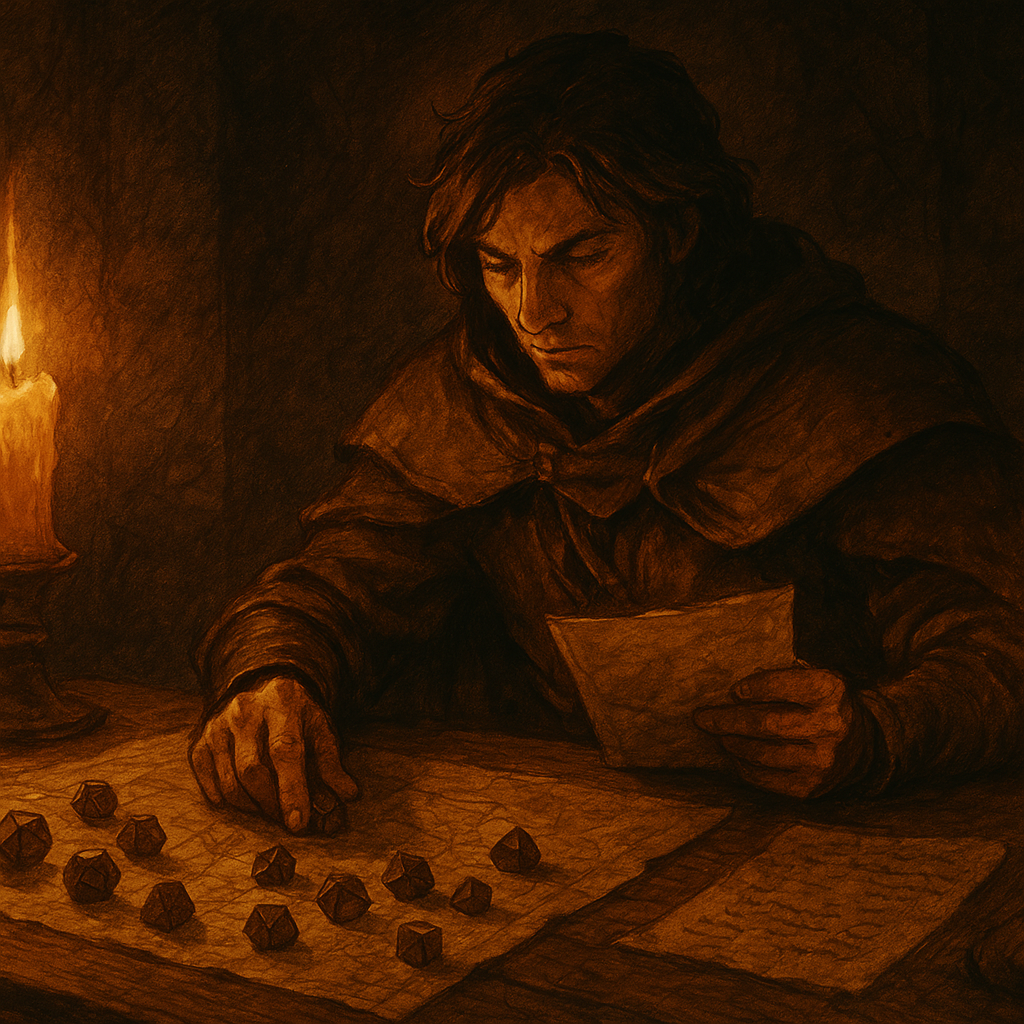
How to Play D&D Solo: The Complete 2026 Guide
You want to play D&D, but you don't have a group. Maybe your friends don't play. Maybe schedules never line up. Maybe you're new and the idea of sitting down at a table with experienced players sounds terrifying.
Good news: solo D&D is not a compromise. In 2026, it's a genuinely good way to play - and in some specific ways, it's better than group play.
What Solo D&D Actually Is
Solo D&D means playing without a human Game Master. Instead of a person narrating the story and running combat, an AI (or a structured set of oracle tables) fills that role.
The AI describes scenes, presents choices, runs combat against you, and reacts to what you do. You control one character and make all the decisions. The AI handles everything else - narration, enemy tactics, consequence, world reaction.
It's not a video game. You're still rolling real dice, making real D&D checks, managing resources, and getting into genuine trouble. The difference is that there's no schedule to coordinate and no one to feel embarrassed in front of when you forget how grappling works.
Why It's Worth Trying
You're new and want to learn without pressure. Solo play teaches you D&D by letting you apply the rules in context. You don't read about what an attack roll is - you make one when a goblin swings a blade at you. You don't study saving throws in the abstract - you learn them at the exact moment a trap activates.
You want to play right now. No waiting for group scheduling. Open the tool, create a character, and you're running in two minutes.
You want to test a character build. Before bringing a new concept to your group, solo play lets you run it through real combat and see how it feels at levels 1-3.
You're a GM who wants to playtest. Running your own dungeon as a player is the fastest way to find pacing problems, balance issues, and dead ends before your actual players hit them.
How It Works in ArcForge
ArcForge's solo play mode is built for this. Here's the actual flow:
Create a character. Choose a race, class, and fill in ability scores. Full character creation - equipment, spells, starting proficiencies. It takes about three minutes.
Start a scene. Pick a setting, tone, and difficulty level. The AI generates an opening with full cinematic narration - not bullet points, but a described scene with atmosphere, sensory detail, and a situation that needs a response.
Make choices. Each scene presents 2-4 options. Every option shows you the risk level (Safe, Clever, or Bold), a preview of what success and failure might look like, and what kind of check you'll need to make.
Roll real dice. D20 mechanics throughout. Your modifier, your roll, versus a real DC. Natural 20s and natural 1s produce dramatically different outcomes. The narration adapts to exactly what you rolled - a 7 on a Stealth check reads very differently than a 19.
Fight in turn-based combat. Full D&D combat: initiative rolls, attack rolls with modifiers, damage calculations, enemy turns with actual tactics, spell slots, conditions, concentration. The system explains each rule as it comes up.
Earn XP and level up. Progress carries across sessions. Your choices in scene two matter in scene four. Character death is possible - and when it happens, it means something.
Tips for Your First Session
Start at Level 1. There's less to manage and you learn the fundamentals faster. Level 1 D&D is often more tense than higher levels anyway.
Play a Fighter or Rogue first. Martial classes have fewer moving parts than spellcasters. You can focus on learning the core loop - roll to attack, calculate damage, track HP - without managing spell slots at the same time.
Play short sessions. Twenty to thirty minutes is a complete experience. Solo play doesn't need a three-hour commitment to feel worthwhile.
Don't try to "win." Solo play is a story generator. Character death isn't failure - it's a dramatic scene. The goal is interesting things happening, not optimal outcomes.
Getting Started
ArcForge's solo play mode is free on the Apprentice tier. No credit card. No trial timer. Create a character and start your first scene in under two minutes.
*Start your solo adventure - free, no credit card.*