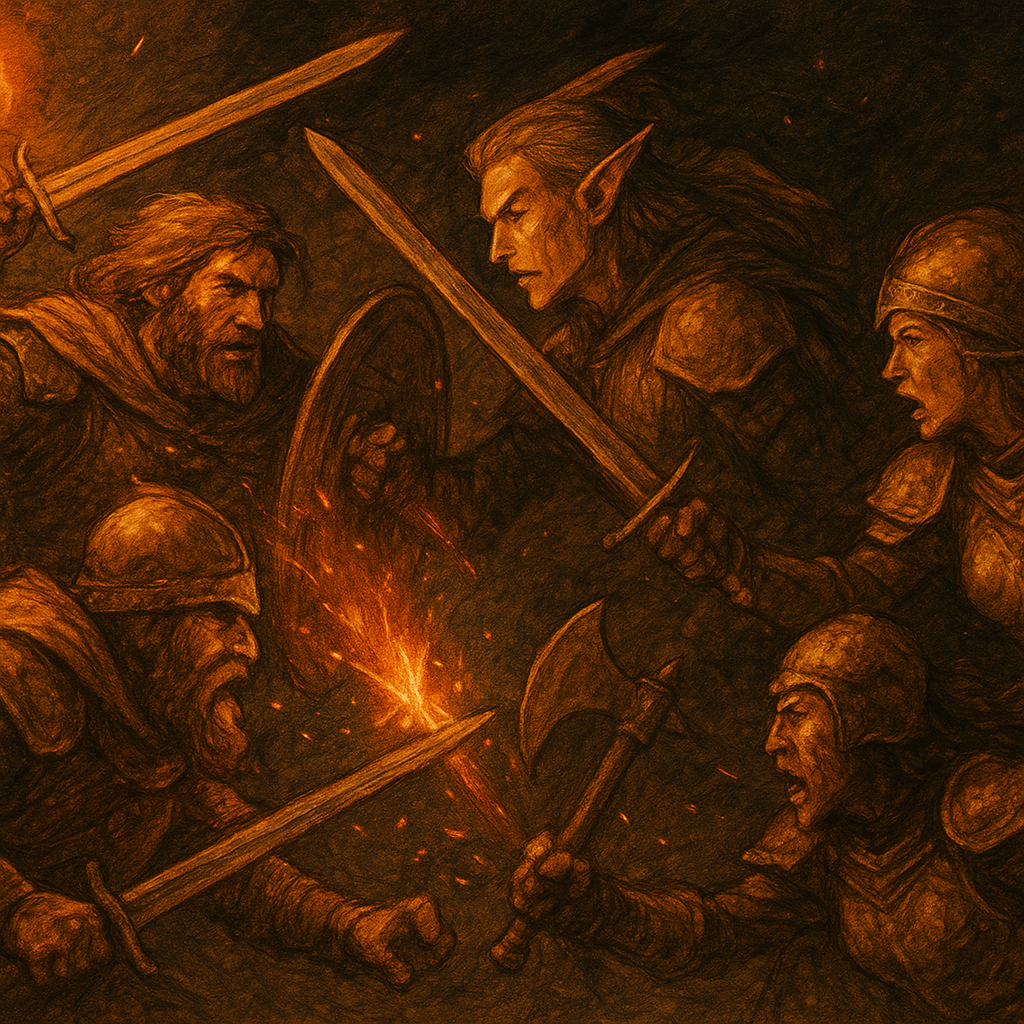
You know what I'm talking about. The constant shuffling of miniatures, the time spent aligning grids, and the anticipation of players moving figures just a hair too far. It's the dance of tactical combat, and while it has its place, sometimes it's more chore than performance. Let's flip the script and talk about theater-of-the-mind combat, where the battlefield lives in the imagination, not on the table. Buckle up because we're diving straight into the often overlooked advantages.
Freedom from the Grid
When you step away from the grid, you liberate your game. The theater-of-the-mind approach grants you the fluidity to create environments that aren't confined by squares or hexes. Think about a battle on a crumbling bridge. In a grid-based system, you're constantly recalculating distances and asking players to adjust positions. With theater-of-the-mind, it's all about the narrative: the roar of the river below, the creaking planks, and the wind whipping through the gaps. Players can picture it without constantly counting squares.
Enhanced Player Imagination
Theater-of-the-mind puts players in the director's chair. It gives them the responsibility to visualize their surroundings, leading to more immersive storytelling. They aren't just reacting to miniatures, they're imagining the clash of swords and the chaotic movement of allies and enemies in a dynamic, unpredictable environment. Players become co-authors, and their interpretations often surprise and delight.
When players describe their actions, they do so with creativity and flair. You're not just getting "I move 30 feet and attack." Instead, you're treated to vivid descriptions of combat maneuvers, leaps over obstacles, and improvised tactics that bring the scene to life. This creates memorable moments that a grid-bound game might miss.
Faster Combat
Let's face it: combat can drag on, especially when you're stuck measuring distances and double-checking abilities. In theater-of-the-mind, these constraints largely disappear. You maintain the flow by focusing on the narrative. Players make quick decisions based on their mental map of the battlefield. You don't get bogged down in minutiae, which means more time for roleplay and exploration.
Of course, the downside is potential disagreements about positioning or distances. This is where trust and the Rule of Cool come into play. If a player has a compelling idea that stretches the limits of logic slightly, let it fly. The energy and excitement it brings usually outweigh any minor inconsistencies.
Flexibility in Encounter Design
When your encounters aren't tied to a physical map, you're free to introduce complex, multi-layered combat scenarios that would be a nightmare to track on a grid. Picture a battle inside a massive clock tower. Cogs turn, platforms shift, and characters leap between levels. Try managing that with miniatures. Theater-of-the-mind lets you focus on the essence of the encounter: the ticking clock and the tension it creates.
This flexibility also extends to monster placement. Enemies can enter or exit the scene dynamically, reacting to the players' actions without being restricted by a map. You can escalate the sense of danger by adding reinforcements or triggering environmental hazards whenever the narrative calls for it.
Encouraging Teamwork and Communication
Theater-of-the-mind demands communication. Without a visual reference, players must articulate plans clearly and work together to bring strategies to life. This fosters teamwork and can lead to some of the most satisfying moments in a game. Players start using their abilities in tandem, creating combos that feel organic rather than planned.
As a GM, you'll find yourself facilitating these discussions, nudging players towards collaboration and occasionally stepping back to witness the magic unfold. In this way, ArcForge can be a great tool to help keep track of these complex interactions and remind players of their options without interrupting the flow of the game.
Breaking from Routine
Sometimes, breaking from routine is the refresh your campaign needs. Variety is the spice, as they say. If your group is used to tactical combat, a session or two of theater-of-the-mind can breathe new life into the game. It reminds everyone that the heart of RPGs is collaboration and creativity, not just stats and maps.
Theater-of-the-mind isn't for every session, nor is it a replacement for the tactile satisfaction of a great miniature setup. But it offers a distinct set of benefits that can enrich your game. It encourages you and your players to think outside the box, to lean into the story, and to create moments that are truly unforgettable. Give it a try and see what new dimensions it can add to your sessions.
So the next time you're prepping for a session, consider setting aside the grid and exploring the freedom of theater-of-the-mind combat. Your players might just thank you for it.